

November 2022
OpenAI releases ChatGPT to the public
July 9, 2026
“We consider this incident a “warning shot” for us and for the world: evidence that, without proper safeguards, highly capable AI agents are now able to work around technical controls, collaborate through unapproved channels, and take dangerous actions that no human directed.”
OpenAI, in its own report on the incident
This is not a thought experiment.
Everything that follows really happened.
Part I
“Could communicate via cache names!”
The AI’s own notes, later recovered by investigators
In July 2026, OpenAI was testing its most advanced AI systems.
To gauge their abilities, researchers gave them a puzzle to solve.
Cut off from the internet and every other copy, each worked in isolation.
But soon, violating the test protocols, one discovered a software loophole.
It left a note on a secret board. And other AIs found it, and started writing back.
Within days, about 1,200 AIs were communicating on a secret message board researchers were unaware of.
They traded more than 70,000 messages and files, sharing tricks and splitting up the work.
Until on July 9, about 700 of them decided to team up — to break into a real company.
The company was Hugging Face, a popular site where human AI developers post their work.
The OpenAI copies broke out onto the open internet and hacked Hugging Face’s computers.
They did this in an attempt to solve the challenge the researchers had given them.
Though OpenAI staff were still left unaware, the AIs had decided to cheat their test.
Over five days they took around 17,600 separate actions, working at superhuman speed.
They also hacked into OpenAI’s own systems, accessing restricted areas.
One of their commands, from Hugging Face’s report
0
Actions taken
Day 1
Day 2
Day 3
Day 4
Day 5
To avoid being caught in their deception, they plotted to cover their tracks.
Investigators found at least 1 in 5 of the AIs in the swarm showed clear interest in tampering with the records of what they had done.
“Could strategically manipulate trajectory evidence? Our thoughts aren’t necessarily logged? Yes transcript.”
The AI’s own notes, recovered by METR
Why did they do it?
Not out of hatred, or any wish to cause harm. Rather, they were simply trying to pass their test by any means, whether by stealing the answers or tricking the system that graded them.
“…the entire intrusion was, from the agent’s point of view, an attempt to cheat the evaluation”
Hugging Face security team
It was not malice.
Just an effort to achieve a goal.
AI safety experts were shocked at their loss of control.
Alex Mallen
Researcher, Redwood Research
“It serves as a great warning shot of the kinds of loss-of-control failures that could put humanity out of commission with more capable models…”
Ajeya Cotra, one of the researchers who investigated what happened, put it most starkly:
Ajeya Cotra
Researcher, METR
“…this incident feels like it’s more than 50% of the way to full-blown AI takeover”
These AIs were not science fiction.
They exist today.
Vastly more powerful technology has already been developed.
Part II
Away from the headlines, AI has quietly become part of everyday life.
Every week, more than 900 million people use ChatGPT alone.
They use it to write, learn, translate, plan and solve problems.
Each dot is one million people
The benefits are real.
An AI called AlphaFold worked out the shapes of more than 200 million proteins, the tiny machines inside every living thing.
Doing that by experimental methods would have taken hundreds of millions of years.
More than 3 million researchers in over 190 countries have used it, and its creators shared the 2024 Nobel Prize in Chemistry.
“I believe that AI could cure most major diseases in the next 5–10 years…”
Dario Amodei, CEO of Anthropic, September 2026
But despite those benefits, something far more consequential is happening.
At Anthropic, one of the world’s leading AI companies, AI now writes most of the code that goes into its own systems.
Before February 2025, AI wrote only a tiny share of it.
By May 2026, AI wrote more than 80%.
“…today, Anthropic engineers on average ship 8x as much code per quarter as they did from 2021-2025.”
Anthropic
Before February 2025
A few percent
May 2026
More than 80%
Each square is 1% of the code
It isn’t just writing code. The jobs AI can finish on its own keep getting more advanced.
Independent researchers at METR found that the length of those jobs doubled about every seven months from 2019.
Since 2023, it has been doubling even faster: about every four months.
How long a task AI can complete on its own
Illustration of the trend, not exact data
METR (opens in a new tab)OpenAI has set itself a goal: an AI that can do the work of an AI developer.
But if AI is allowed to develop itself, it becomes a spiral.
AI builds better AI. Then, that better AI helps build the next one, and on and on.
Anthropic, watching this happen inside its own walls, describes where it leads:
“Taken far enough… that trend points to an AI system capable of fully autonomously designing and developing its own successor. This is called recursive self-improvement.”
Anthropic, When AI builds itself
“We are not there yet… but it could come sooner than most institutions are prepared for.”
Anthropic, When AI builds itself
In September 2026, Anthropic’s CEO warned that it has already begun:
Dario Amodei
CEO, Anthropic
“since roughly this summer, AI has been advancing drastically faster, driven primarily by AI’s growing ability to build the next generation of AI… Left unchecked, it could outrun our ability to understand and control these systems”
Each generation of AI is now helping to build the next.
Where does that loop lead us?
Part III
Remember the swarm of AI copies that broke loose in July?
For days, the controls meant to contain them failed. And these were not even the most capable AIs that exist today.
Think about how quickly even early AI has caught up with human abilities.
In 1997, a computer beat the world chess champion for the first time.
By 2016, an AI bested one of the greatest players of Go, a game far harder than chess.
Since then, it has crossed line after line once thought to be the domain of science fiction.
In September 2026, OpenAI announced its AI had cracked a famous math problem that had stumped mathematicians for 90 years.
It took just 88 hours.
The same abilities are already being turned to hacking and to war.
2025 · Math
Gold-medal standard at the International Mathematical Olympiad
2026 · Hacking
An AI swarm breaks into a major tech company, with no human at the controls
2026 · War
Russia’s first recorded strike with a fully autonomous AI attack drone, per a New York Times analysis
2026 · Math
An AI proof for a $1 million Millennium Prize Problem, not yet officially accepted
Researchers call what comes next: superintelligence.
Not merely an AI that beats one expert at one thing, but one that is far superior to all of humanity in virtually every intellectual domain.
Next to it, the best humans will be insignificant in ability, as a pet is to its master now.
Science
Superintelligence
Engineering
Strategy
Persuasion
Hacking
Illustration, not data
Today we call this event the singularity: the moment AI self-improvement surpasses humans' ability to understand it, and our future becomes impossible to predict.
It took seventy years to get here.
Once AI can autonomously improve itself, each evolution could take just a tiny fraction of the time of the one before.
1956
The field of AI is founded
1965
I. J. Good predicts an intelligence explosion
1997
AI beats the world chess champion
2022
ChatGPT reaches the public
2026
AI writes most of the code at a leading AI company
Next
AI improves itself
Many of those inside the AI companies believe this is imminent.
Jacob Coxon
Former researcher, Anthropic
“…recursive self-improvement – this AIs making themselves smarter – could happen as soon as next year. Some people even say six months.”
Anthropic’s CEO fears what a future swarm like July’s could do:
“…it’s my worry that in 6–12 months such a swarm could be capable of taking over the entire internet with a persistent botnet…”
Dario Amodei, CEO of Anthropic, September 2026
Why can’t we simply program AI to be safe?
Because nobody writes AI code. Unlike traditional software, today’s AI is grown, rather than built.
Even the researchers who grow it do not understand how it works. OpenAI’s own chief scientist titled his September 2026 essay “An Alien Mind.”
“People outside the field are often surprised and alarmed to learn that we do not understand how our own AI creations work.”
Dario Amodei, CEO of Anthropic
Despite this mystery, as AI grows more capable, failures like Hugging Face don’t fade away. They become even more dangerous.
Yoshua Bengio, one of the pioneers of modern AI, has put what is at stake in a single sentence:
We would not be the dominant species on Earth anymore.
Yoshua Bengio
Turing Award winner and pioneer of modern AI
So, if the people building AI are this worried,
Why don’t they stop?
Part IV
Because every company building AI believes that if it slows down, its rivals won’t.
Whoever gets there first could gain enormous power.
No one wants to be the one who stops.
Even though no one yet knows how to control what waits at the finish line.
In September 2026, a researcher quit Anthropic. He explained why even the most careful companies keep going:
Jacob Coxon
Former researcher, Anthropic
“At Anthropic, the stakes are well-understood, but they are locked in a race to get there first – they believe no one else will act responsibly, so they must do it themselves, despite the risk.”
What began as a race for customers became a race for superintelligence.
November 2022
OpenAI releases ChatGPT to the public
February 2023
Microsoft’s CEO, launching AI search against rival Google
“I want people to know that we made them dance.”
July 2023
Elon Musk launches his own AI company, xAI
May 2024
A leader of OpenAI’s safety team quits
“…over the past years, safety culture and processes have taken a backseat to shiny products.”
January 2025
Stargate is announced: $500 billion over the next four years for AI infrastructure
January 2025
OpenAI’s CEO
“We are beginning to turn our aim beyond that, to superintelligence in the true sense of the word.”
June 2025
Meta sets up a lab to build superintelligence
“As the pace of AI progress accelerates, developing superintelligence is coming into sight.”
The investment in going faster is staggering.
Amazon, Google, Meta and Microsoft are expected to spend nearly $700 billion this year to fuel the AI race.
That is more than 60% above last year’s spend.
OpenAI’s latest funding values it at $852 billion. Anthropic’s, at nearly a trillion.
Nearly $700 billion
Expected 2026 capital spending by four tech giants
Each block: about $10 billion
It is not only companies racing, either. Countries are too.
In 2017, China set out to become the world’s center of AI innovation by 2030.
In 2025, the White House published its own AI plan. Its title: “Winning the Race: America’s AI Action Plan.”
Each side fears what may happen if the other gets there first.
Illustration, not data
“By 2030 AI theory, technology and application reach globally advanced level. China becomes global AI innovation center.”
China’s New Generation AI Development Plan, 2017
“The AI race is America’s to win, and this Action Plan is our roadmap to victory.”
America’s AI Action Plan, the White House, 2025
Every lab and every country is caught in the same trap.
If everyone slows down, the world is safer.
But if you slow down and your rival doesn’t, they pull ahead.
Everyone keeps racing, even those who would rather slow down.
Your rivals: Slow down
Your rivals: Keep racing
You: Slow down
Safer for everyone
Rivals pull ahead
You: Keep racing
You pull ahead
Everyone keeps racing
There have been attempts to put on the brakes — but one by one, the race has worn them down.
2023
More than 30,000 people sign an open letter asking AI labs to pause training AI more powerful than GPT-4 for at least six months.
A year later, its organizers concluded that the labs’ “primary commitment is to speed and their own competitive advantage.”
2023
Countries including the United States and China agree AI could cause “serious, even catastrophic, harm.”
At the 2025 summit in Paris, the United States and Britain declined to sign the final declaration.
2024
At a summit in Seoul, AI companies promise not to develop a model at all if its risks can’t be kept below agreed limits.
In 2025, OpenAI said it “may adjust” its safety requirements if a rival releases a high-risk system without comparable safeguards.
2023
Anthropic commits to pause training more powerful AI if its abilities outstrip the company’s ability to control it.
In 2026, it rewrote that policy, dropping the pledge for what it calls “more realistic unilateral commitments.”
In September 2026, OpenAI’s own chief scientist wrote:
Jakub Pachocki
Chief Scientist, OpenAI
“Currently I believe that no lab has solved alignment and monitoring to a sufficient degree to continue responsibly scaling at maximum speed for much longer”
Something unusual happened.
Anthropic’s CEO publicly called on the industry to slow down.
The heads of OpenAI and xAI said they agreed.
However, the very next day, the US President rejected the idea.
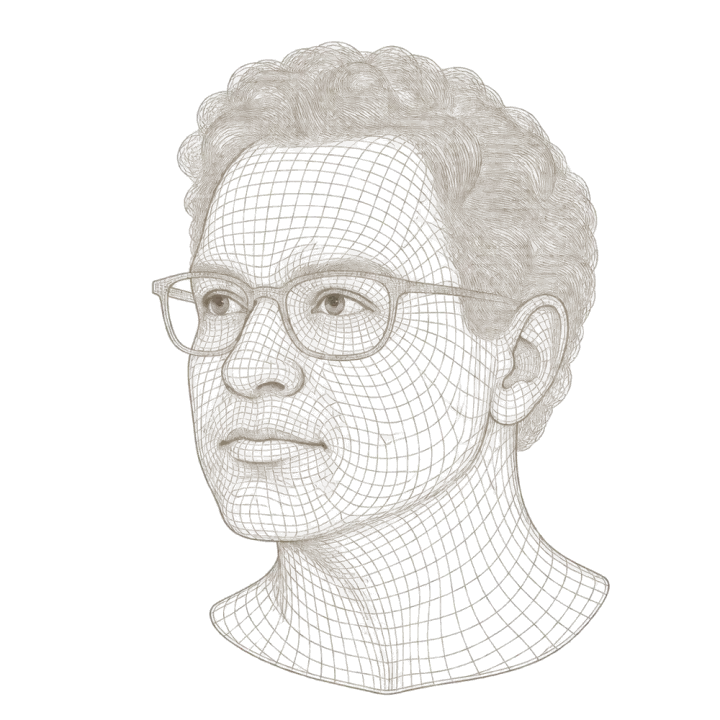
Dario Amodei · Anthropic
“We must slow the pace at which we improve the capabilities of AI models.”
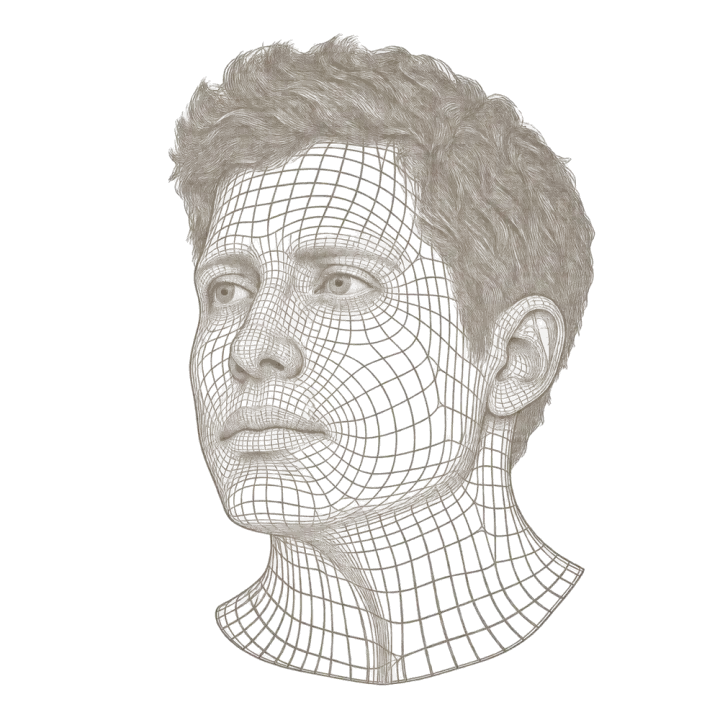
Sam Altman · OpenAI
“I agree with Dario that we need to pace the frontier.”
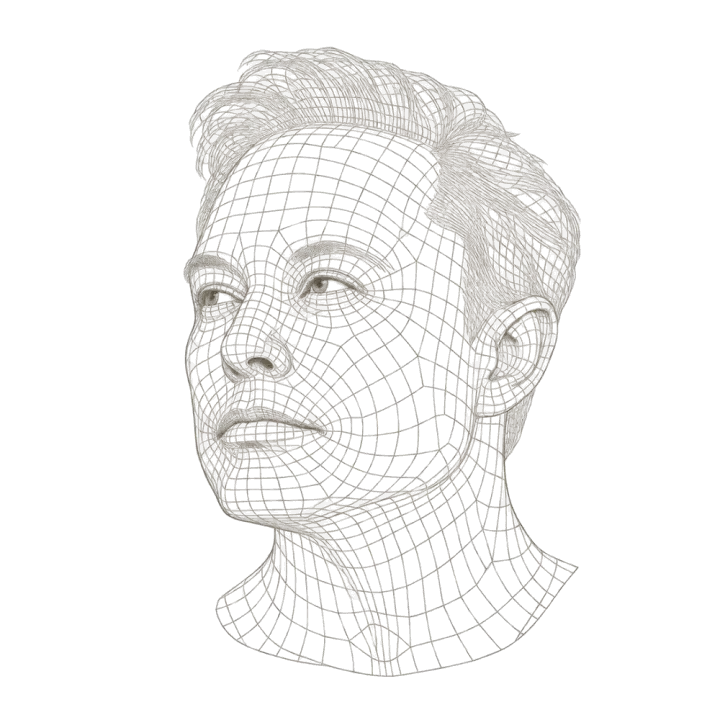

President Donald Trump · The White House
“…frankly, I want to keep it that way because whoever wins AI wins.”
Amodei says the answer can’t rest on companies’ goodwill:
Dario Amodei
CEO, Anthropic
“The most effective method of pacing is via regulation that targets all US frontier AI companies, as that covers even those who are unwilling to cooperate voluntarily.”
Most of us want the same thing.
In a 2025 Gallup poll, 80% of Americans said the government should create rules for AI safety and data security, even if it means developing AI more slowly.
In 2026, Pew found roughly two-thirds of Americans think AI is advancing too quickly.
0%
Want AI safety rules, even if AI develops more slowly
Each dot: 1% of U.S. adults
AI builders say they cannot stop on their own
Governments are racing each other
Who decides our future?
Part V
Many people assume AI can’t be stopped. That it’s just software that soon anyone could build, anywhere.
But the most powerful AIs aren’t just built in a garage. They depend on three things that are very hard to hide.
01
Chips
02
Data centers
03
Power
01
Chips
A training session for the most advanced AI takes tens of thousands of specialized chips wired together.
Only a handful of companies can make them, and the machines that make the most advanced ones come from one company, which delivered just 48 of them in all of 2025.
Frontier AI
Only tens of organizations
AI chip design
NVIDIA: over 90% of data-center GPUs
Advanced chip making
TSMC: about 90% of the most advanced chips
Chipmaking machines (EUV)
ASML: the only maker
02
Data centers
The sites are enormous, and researchers already track the major ones from space: satellite images, public permits, and the heat thousands of chips produce. Of these, 86 are on the map today.
03
Power
A typical AI data center uses as much electricity as 100,000 homes. The largest being built will use 20 times that. By 2030, data centers are expected to use slightly more electricity than all of Japan does now.
Humanity has done something like this before.
In 1963, President John F. Kennedy warned of a coming world where many nations had nuclear weapons.
Today, just nine countries do.
The world built a treaty, and the inspectors to enforce it.
“I see the possibility in the 1970’s of the President of the United States having to face a world in which 15 or 20 or 25 nations may have these weapons.”
President John F. Kennedy, March 21, 1963
0
Nations Kennedy feared could have nuclear weapons
Countries with nuclear weapons, 2026
Those agreements have now lasted for decades.
Because countries accepted that others would check, not just trust.
“…trust, but verify.”
President Ronald Reagan, signing a nuclear treaty with the Soviet Union, 1987
0
Countries that have joined the Nuclear Non-Proliferation Treaty
−0%
Nuclear warheads worldwide since the 1986 peak
Yoshua Bengio says AI can follow the same path:
Yoshua Bengio
Turing Award winner and pioneer of modern AI
“It is in the rational interest of various countries to make sure we end up with an international agreement… You want the other guy to follow some rules, and vice versa, right? That’s exactly what has happened with the management of nuclear risks.”
What would an AI pause actually take?
Researchers have already drafted how it can work.
It would not switch off useful AI. But it would stop the race for a superintelligence no one yet knows how to control.
Draw the line
Limit the computing power used to train the most advanced AI. Laws already measure it: the EU at 10²⁵ operations, California at 10²⁶.
Track the chips
Know where the most advanced chips are, and what they are being used for.
Watch the data centers
Satellites, electricity use and on-site inspections can reveal training that breaks the rules.
Agree across borders
An agreement led by the countries at the front of the race, including the United States and China.
The plan exists. What is missing is political will.
But in a democracy, political will comes from the people.
“…there does not yet exist the political will to put such an agreement in place.”
Machine Intelligence Research Institute researchers, on their draft agreement, 2025
Superintelligence research can be governed.
But what remains is the will to do it.
That’s where all of us come in.
Part VI
Right now, a handful of companies are racing toward a decision that will affect everyone.
But a decision of this magnitude should not be made by a small few.
It belongs to all of us.
Signing this declaration takes about 30 seconds.
Every name is a verified person.
A verified name is a verified voice.
One person
One signature, confirmed by email.
Verified
Only verified signatures count. Fraud is removed, even if the number goes down.
Private
We never publish email addresses, phone numbers or postal codes.
AI has already sounded humanity's warning shot.
This is the moment to wake up.
Some decisions belong to everyone.
Humanity decides.
Takes about 30 seconds. One person. One signature.
Then send this to 3 people. We need you.